
How Habilin Farms Came To Be
Prior to being an excellent example of permaculture design when it comes to creating a self-sustaining farm, Habilin Farms used to be very different then what it is now. Spanning 5 generations ago, it used to be a coconut plantation that regularly supplied yield. The year 2008 saw a potential improvement for the property but, at the time, Ben “Bambu” Francia was working on creating more businesses and taking care of his first-born child.
Enter 2020 when the pandemic shook the world and nearly everyone turned from being an office junkie to regularly working from home. Ben became the ultimate plantito by regularly going to the farm during the weekends and seeing to it that improvements were made every time he was there. Originally, it was where he and the family could go during the weekends, just to escape the weekdays where they’re all cooped up at home because of the quarantine. Eventually, he planned to make it a place where himself and his family can retire but it was soon realized that Habilin Farms can be so much more.
After taking proper farming education and taking up Technical Education And Skills Development Authority’s (TESDA) Organic Agricultural Production (OAP) course, Ben decided to apply what he learned and become a full-time farmer. After nearly 2 years of improvement, innovation and learning, Habilin Farms transformed into what it is today: a paragon of permaculture and diversified Farming.
More Than An Ordinary Organic Farm
Habilin Farms prides itself on being a self-sustaining organic farm that focuses on regenerative and sustainable agricultural practices like Organic Agriculture, Soil Regeneration, Permaculture and Agroforestry.
Just because a farm claims to be organic does not necessarily mean that it’s sustainable. Some organic farms still follow conventional methods of farm production to meet standards or quotas for the purposes of surpassing annual profit targets. This is not something that Habilin Farms would want for itself, so it focuses on a permaculture design approach that prioritizes the long term survival of an ecosystem rather than a business.

That being said, Habilin Farms doesn’t follow the conventional monocropping approach because it only produces one kind of crop yield. It needed to be more diverse in order to address the issue of food security. After all, it didn’t make sense for a farm to make one kind of crop in order to make money to buy other crops – it wasn’t sustainable enough. Habilin Farms committed to the idea of planting crops in the most natural way possible, the way Mother Nature intended.
By planting different kinds of fruit trees and root crops to simulate how they would grow in the wild, and integrating it with livestock that help keep certain plant populations in check, Habilin Farms is able to emulate existing natural systems.
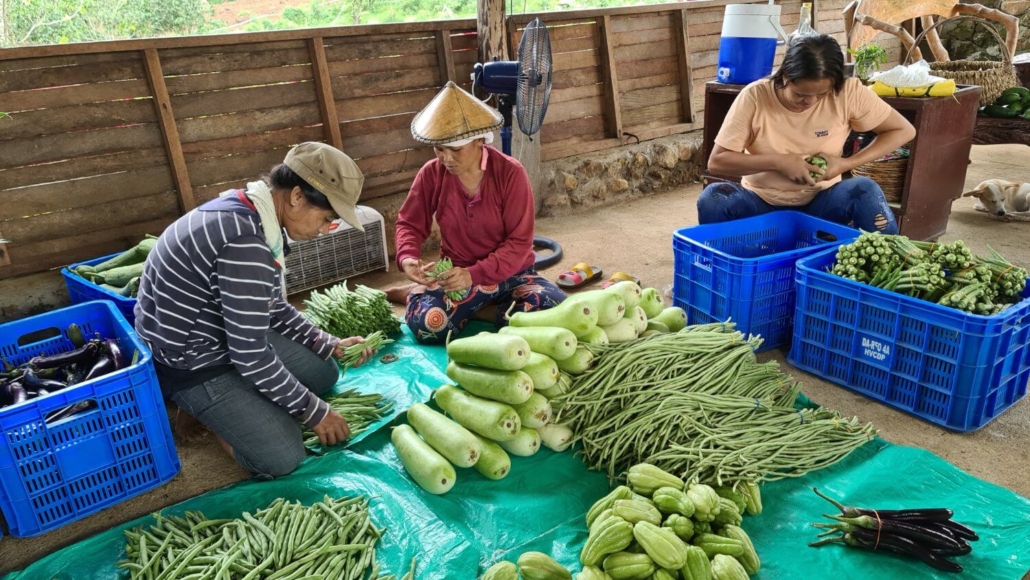
Apart from being an extraordinarily organic farm, Habilin Farms is also a form of social enterprise. Over the past 2 years, it has provided several job opportunities for the locals in the area whose expertise range from organic farming to handicrafts.
Built With Permaculture In Mind
Habilin Farms fervently believes in its mantra that is: Nurture nature and nature will nurture you. This actually stems from 3 ethics that form the core of Permaculture: Earth Care, People Care and Fair Share. These 3 ethics help to create a more sustainable farm that’s not only eager to take care of its people, but also of the Earth that helps keep it alive.
Earth Care revolves around protecting the environment and rejuvenating already degrading systems that otherwise play a major role in the survival of an entire system. For example, if water isn’t kept clean and abundant, if forests are continuously cut down in favor of human settlements and if the soil is abused for the purpose of monetary gain, then there won’t be much Earth can do for us once these resources are depleted. So drastic measures need to be taken in order to make sure that these factors in the system are well taken care of.
Habilin Farms ensures it follows Earth Care by not using any form of artificial fertilizer or pesticide for its crops. It also makes sure that it reduces the carbon footprint it produces by refraining from using any plastic or paper utensils and plates and instead opting for more organic alternatives like banana leaves.
People Care involves keeping the health and well-being of humanity in mind. With this being taken care of, humans in general won’t have to think twice about taking care of the Earth because they don’t have to be anxious about security and stability. This kind of community is evident in intact and robust communities like indigenous peoples and native tribes.
Habilin Farms handles People Care by avoiding the use of potentially harmful chemicals that’s supposed to fertilize food and drive away pests. These are, after all, harmful to humans as well. By becoming a social enterprise, it’s also helping the local community through jobs opportunities.
Fair Share is the third ethic that talks about limiting consumption and putting the excess back to both Earth Care and People Care. This ethic makes it imperative that whatever resources acquired from the Earth need to be distributed among the people and be given back to the Earth itself for its sustenance as well.
In terms of Fair Share, Habilin Farms makes sure that any excess it creates goes back to the Earth one way or another, thereby avoiding the creation of waste and making sure that anything biodegradable helps fertilize the soil.
Habilin Farms defines Permaculture as a sustainable way of designing farms and human habitats that is consistent with natural patterns. It focuses on creating living spaces that provide basic human needs while at the same time caring for the environment.
Because of its commitment to the permaculture design approach, Habilin Farms is guaranteed to last for many generations to come because of how it is sustainably built – every improvement and adjustment is made with both purpose and the long-term in mind.